Beyond Transcripts: Why Monitoring Beats Retrieval
Every tax practice knows the transcript ritual: authorize, request, download, decode, repeat. Transcript retrieval built the modern representation industry, and it carries a structural flaw that compounds with every client added. A transcript is a photograph. IRS accounts are motion pictures.
The retrieval model and its ceiling
Retrieval answers one question well: what is true right now for this client? It cannot answer the question firms actually need answered: which of my clients changed?
To approximate that with transcripts alone, you pull for everyone on a schedule and read what you pulled. The labor scales linearly with client count while the yield does not, because in any given month most accounts have not changed. A firm monitoring 300 clients quarterly is performing 1,200 retrievals a year to surface perhaps a few dozen events that matter. The rest is confirmation of nothing.
There are practical constraints too. Transcripts are dense and coded, TC 150, TC 806, TC 971, TC 570, requiring trained interpretation. IRS access channels have their own friction: the Transcript Delivery System requires e-Services credentials and active authorizations, and access rules have tightened in recent years, a change NAEA and other professional bodies have engaged the IRS on directly.
What changes with monitoring
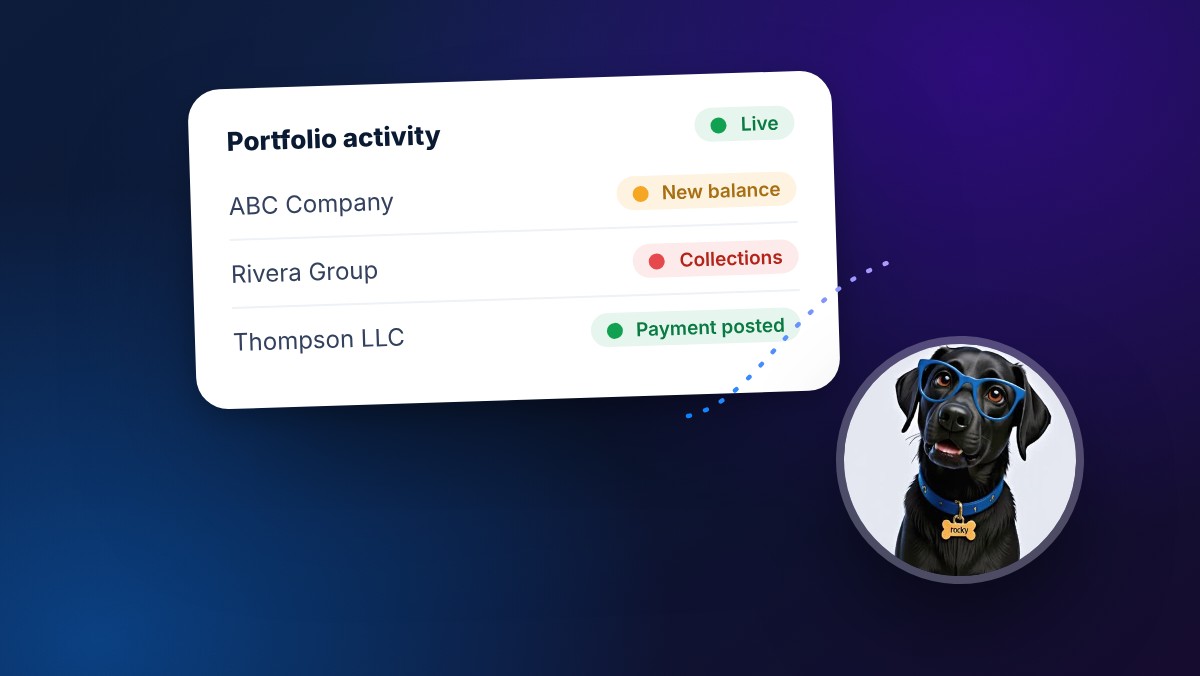
Continuous monitoring inverts the workflow. Instead of your team going to look, the change comes to you: a new balance posts, a filing gap appears, payroll deposits go irregular, a notice issues, collection status advances. The daily question shifts from “let’s review everyone” to “these four clients moved this week, and here is why it matters.”
The downstream effects compound:
- Staff time moves up the value chain, from retrieval and decoding toward judgment, planning, and client conversations.
- Deadlines stop hiding. The events that create them, a CP2000’s 30-day response window, an LT11’s 30-day CDP window, surface when they post rather than when someone next pulls.
- Client relationships change tone. You call them about the new balance before they call you about the letter. That single reversal is the difference between a firm that looks reactive and one that looks indispensable.
- Risk exposure narrows. Missed collection deadlines are among the more painful malpractice scenarios in representation work, and they trace back to information arriving late.
Alerts are not intelligence
One caution: a monitoring layer that emits raw codes just relocates the decoding problem. “TC 971 posted on account 4821” is not an answer; it is another thing to look up.
The useful layer interprets. It reads the new event in the context of that account’s history, distinguishes routine activity from material change, and ranks what it finds against everything else across the client base. That is the difference between a data feed and an intelligence layer, and it is the difference between a tool your staff checks and a tool your staff trusts.
Where TaxRock fits
TaxRock continuously monitors every authorized taxpayer and turns IRS activity into prioritized, plain-English signals, with Rocky able to answer questions across the whole portfolio or drill into a single client. If your firm still runs on the transcript ritual, see what continuous IRS intelligence looks like.